
You can't tell your heart rate to slow down, but you can change your breathing — simple exercises to steady yourself in a few minutes.
Pillar:
Relax
3 min read
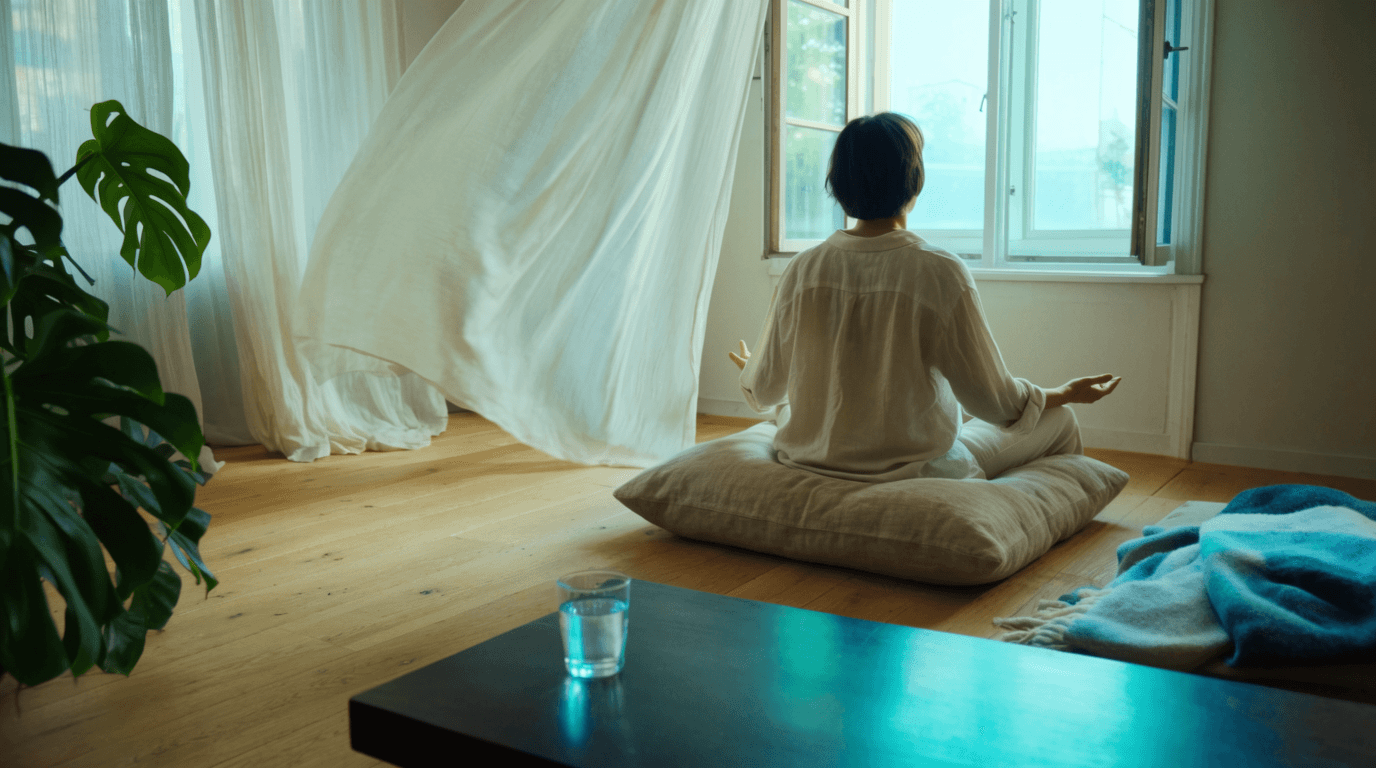
Your breath is one of the few automatic body functions you can also control consciously — and that makes it one of the most useful tools you have for managing stress in the moment. You can’t usually tell your heart rate to slow down directly, but you can change your breathing, and your heart rate and nervous system will often follow.
This article explains why breathing affects your stress levels, walks through several simple guided exercises you can try, and covers how to build breathing practice into your routine.
Why Breathing Affects Your Stress Levels
Your breathing and your nervous system are closely linked. Fast, shallow breathing is part of your body’s stress response — it’s what happens automatically when you’re anxious or under pressure. The reverse is also true: slow, deep breathing, especially with longer exhales than inhales, sends a signal to your nervous system that it’s safe to calm down.
This is why breathing exercises work so quickly compared to other stress management tools — you’re influencing your physiology directly, not just your thoughts.
What Makes a Breathing Exercise Effective
Slow pace — rushed breathing won’t have the same calming effect
Depth — breathing into your belly, not just your chest
Longer exhale than inhale — this is often the key ingredient in triggering a calming response
A few minutes of consistency — a single breath won’t do much; a few rounds will
Simple Exercises to Try
Belly breathing: place one hand on your chest and one on your belly. Breathe in slowly through your nose so your belly rises more than your chest, then exhale slowly through your mouth. Repeat for a few minutes.
Extended exhale: breathe in for a count of four, then exhale slowly for a count of six or eight. The longer exhale is what helps activate your body’s calming response.
4-7-8 breathing: inhale for four counts, hold for seven, exhale slowly for eight. This is a slightly more advanced pattern that some people find especially calming, though it can feel unusual at first.
Sighing breath: take a deep breath in, then let it out with an audible sigh, releasing tension as you exhale. Repeat a few times. This is a quick option when you don’t have time for a longer practice.
How to Practice
You don’t need a special setting, though a quiet spot helps while you’re learning. Sit or lie somewhere comfortable, relax your shoulders, and close your eyes if that feels comfortable. Start with a minute or two and build up as it feels natural. If counting feels distracting at first, simply focus on making your exhale longer than your inhale.
It’s normal for your mind to wander or for the breathing to feel effortful initially. Like any skill, it gets easier and more natural with repetition.
Making It a Habit
Breathing exercises work best when they’re not just an emergency tool. Practising for a few minutes daily — in the morning, before bed, or during a natural pause in your day — builds a baseline of calm and makes the technique easier to access quickly when you actually need it under pressure.
When to Use Breathing Exercises
In the moment — before a difficult conversation, during a stressful commute, or when you notice tension building
As prevention — a regular daily practice that keeps your baseline stress lower
Alongside other tools — breathing exercises pair well with mindfulness, movement, or simply stepping away from a stressful situation for a few minutes
Breathing exercises aren’t a cure-all, and if stress or anxiety feels constant or overwhelming, it’s worth speaking to a professional. But for everyday tension, they’re one of the fastest, most accessible tools available — free, portable, and usable anywhere.
You’re breathing all day regardless — a few minutes of doing it deliberately, and well, can shift how your whole body and mind feel. Try one exercise today and notice the difference, even if it’s small.
If you’d like a voice to guide you through it rather than counting alone, Sparkery’s app has a library of guided breathing sessions for exactly this.
Tags:
Meditation
Breathwork
Share it:
Every read, recipe and workout brings you one step closer to feeling better every day.