
Weight lost isn't automatically fat lost. Why muscle loss is a real risk, and the two levers that protect lean mass.
Pillar:
Move
6 min read
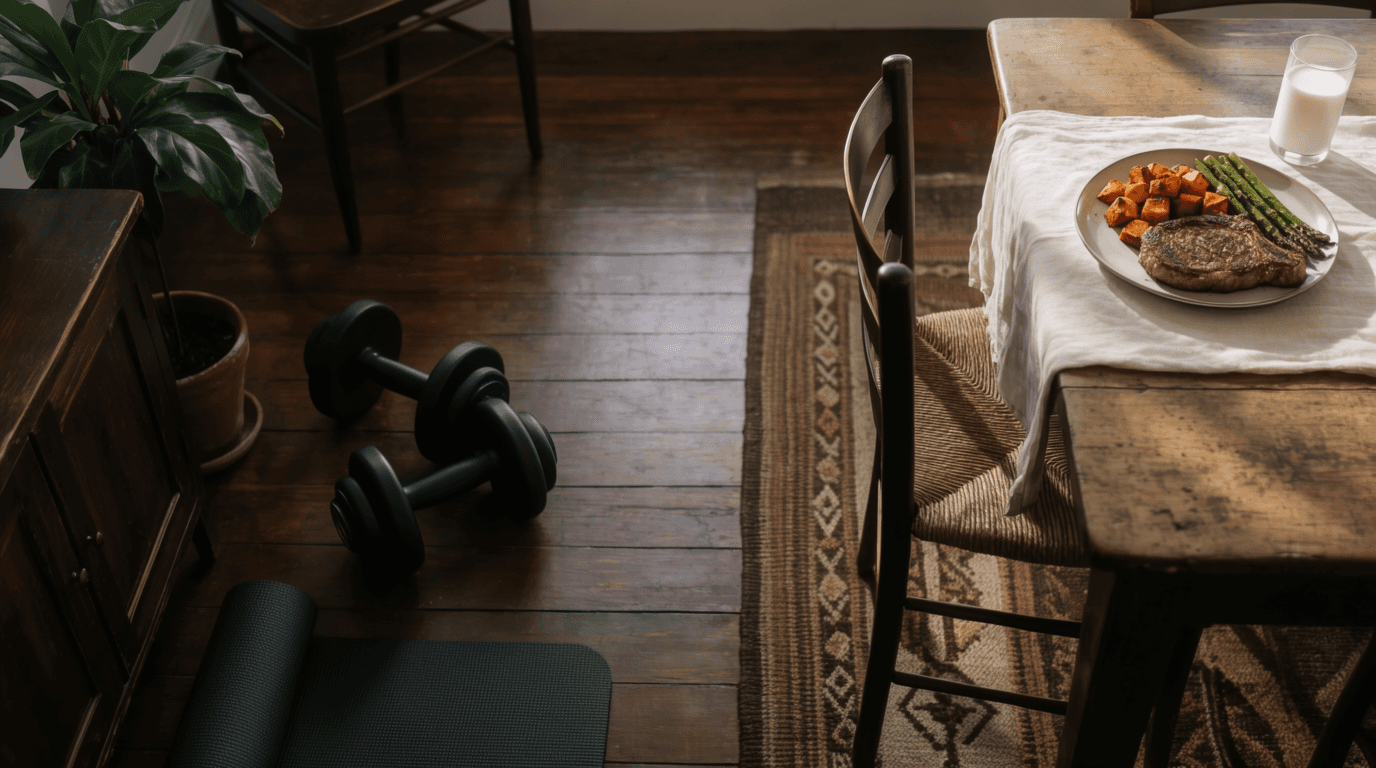
GLP-1 medications are remarkably effective at reducing overall body weight, but weight lost isn’t automatically the same as fat lost. Without deliberate effort, a meaningful portion of that weight can come from muscle, and that’s a detail that matters far more than it’s usually given credit for in the headlines about these medications.
Why Muscle Loss Is a Real Risk
Research on people taking GLP-1 medications for weight loss suggests that lean tissue can account for roughly a quarter to a third of total weight lost when nutrition and exercise aren’t actively managed. In some semaglutide studies, fat mass dropped substantially more than lean mass in percentage terms, but the lean mass decline was still far from negligible in absolute terms. This isn’t a flaw specific to these medications, any significant, sustained weight loss carries some risk of muscle loss, but the scale and speed of change on a GLP-1 makes it worth paying close attention to.
Putting the Numbers Into Perspective
Percentages can be hard to picture, so it helps to put a rough number on it. If someone loses 20kg on a GLP-1 medication and roughly a quarter of that is lean tissue, that’s around 5kg of muscle, more than most people would lose from a bout of flu, an injury lay-off, or even a few months of complete inactivity. Spread across major muscle groups, that’s enough to noticeably affect strength, the way clothes fit, and how capable your body feels day to day, even as the number on the scale looks like unambiguous success.
This is precisely why the conversation around GLP-1 medications has shifted over the past couple of years, from purely “how much weight can this help you lose” to “how do we make sure the weight lost is the right kind.” It’s a more useful question, and thankfully one with a fairly clear answer.
Why It Matters Beyond Appearance
Muscle isn’t just about strength or how your body looks. It plays a central role in blood sugar regulation, since muscle tissue is one of the body’s main stores for glucose, in resting metabolic rate, and in your ability to recover from illness, injury, or surgery, since the body draws on muscle reserves during periods of physical stress. Muscle also supports bone density, joint stability, and balance, all of which become more consequential as the years go on.
Losing muscle alongside fat can leave someone lighter on the scale but functionally weaker, and more vulnerable to the very issues, poor metabolic health, reduced independence later in life, that weight loss is often aimed at improving in the first place. It’s a genuinely important distinction: the goal isn’t just a smaller body, it’s a healthier, more capable one.
The Two Levers That Matter Most
The research is fairly consistent on what actually protects lean mass during GLP-1 treatment, and it comes down to two things working together, neither of which is complicated or expensive.
Adequate protein. Most guidance during active weight loss points to somewhere in the region of 1.2 to 1.5 grams of protein per kilogram of body weight per day, higher than many people naturally eat, particularly once appetite drops.
Resistance training. Structured strength work two to three times a week, covering the major muscle groups, gives your body a reason to hold onto muscle even in a calorie deficit.
Studies combining GLP-1 medication with resistance training consistently show better preservation of muscle, strength, and even bone density compared with medication alone. The mechanical loading from training appears to protect the musculoskeletal system in a way the medication by itself doesn’t replicate, essentially giving your body a clear signal that the muscle you have is still needed, even as fat stores are being drawn down elsewhere.
What This Looks Like Day to Day
In practical terms, this doesn’t need to be complicated. A workable pattern for most people looks something like: a protein source at the centre of every meal rather than an afterthought, two or three short resistance sessions a week covering legs, back, chest, shoulders, and arms across the week rather than every muscle every session, and everyday movement like walking filling in the gaps. None of this requires a gym membership, hours of free time, or a dramatic lifestyle overhaul, it’s closer to a modest, consistent habit than a new full-time commitment.
Closing the Gap in Practice
In practice, most people on a GLP-1 fall short of their protein target simply because their appetite is smaller, and it’s easy to fill that reduced capacity with whatever’s easiest rather than what’s most protein-dense. Prioritising a protein source at the start of each meal, keeping simple high-protein options on hand for days when cooking feels like too much, and not skipping meals altogether despite low hunger all make a genuine difference. Pairing this with two or three short resistance sessions a week, even at a modest intensity to begin with, covers both sides of the equation.
How This Compares to Diet-Only Weight Loss
It’s worth knowing that muscle loss alongside weight loss isn’t unique to GLP-1 medications, it happens with any sustained calorie deficit, including traditional dieting. What’s different here is largely the pace and scale: because these medications can produce faster, more sustained weight loss than most people achieve through diet changes alone, the absolute amount of muscle at risk over a given period tends to be larger too, simply because more total weight is coming off in the same window of time. The same protective principles, protein and resistance training, apply either way, but they matter more, not less, when the rate of change is faster.
Tracking Progress Beyond the Scale
Because the scale can’t tell you whether you’re losing fat or muscle, it’s worth using at least one other way to track progress. This doesn’t need to be complicated or expensive: how your clothes fit, whether you can lift the same or slightly more each week in your strength sessions, and how capable everyday tasks like carrying shopping or climbing stairs feel are all useful, low-cost indicators. Some people also find a simple tape measure, tracking waist circumference alongside body weight, or an occasional body composition scan through their gym or healthcare provider, gives a more complete picture than the scale alone. None of these need to be tracked obsessively, checking in every few weeks is generally more useful, and less stressful, than a daily habit.
When to Loop In Your Doctor
Rapid or unexplained strength loss, persistent fatigue that doesn’t improve with rest, or real difficulty eating enough to function are all worth raising with your prescriber. They may also suggest involving a dietitian if getting enough protein on a much smaller appetite feels genuinely hard to manage alone, particularly if you have another health condition that also affects your nutrition needs.
It’s also worth saying that none of this needs to feel like a second job layered on top of managing a new medication. Most people find that once protein and a couple of short strength sessions become part of the weekly rhythm, they stop requiring much conscious thought at all, in the same way brushing your teeth or locking the front door eventually does. The first few weeks of building the habit are the hardest part by a wide margin.
The scale doesn’t distinguish between fat and muscle, but your body absolutely does.
A little extra attention to protein and strength work now is what determines whether the weight you lose is the weight you wanted to lose.
Sparkery’s strength workouts are built with exactly this kind of muscle-preserving, function-first approach in mind, not just aesthetics.
Tags:
Article
GLP-1
Share it:
Every read, recipe and workout brings you one step closer to feeling better every day.