
Resistance training protects muscle and bone in a way the medication alone can't — how to structure something simple and sustainable.
Pillar:
Move
6 min read
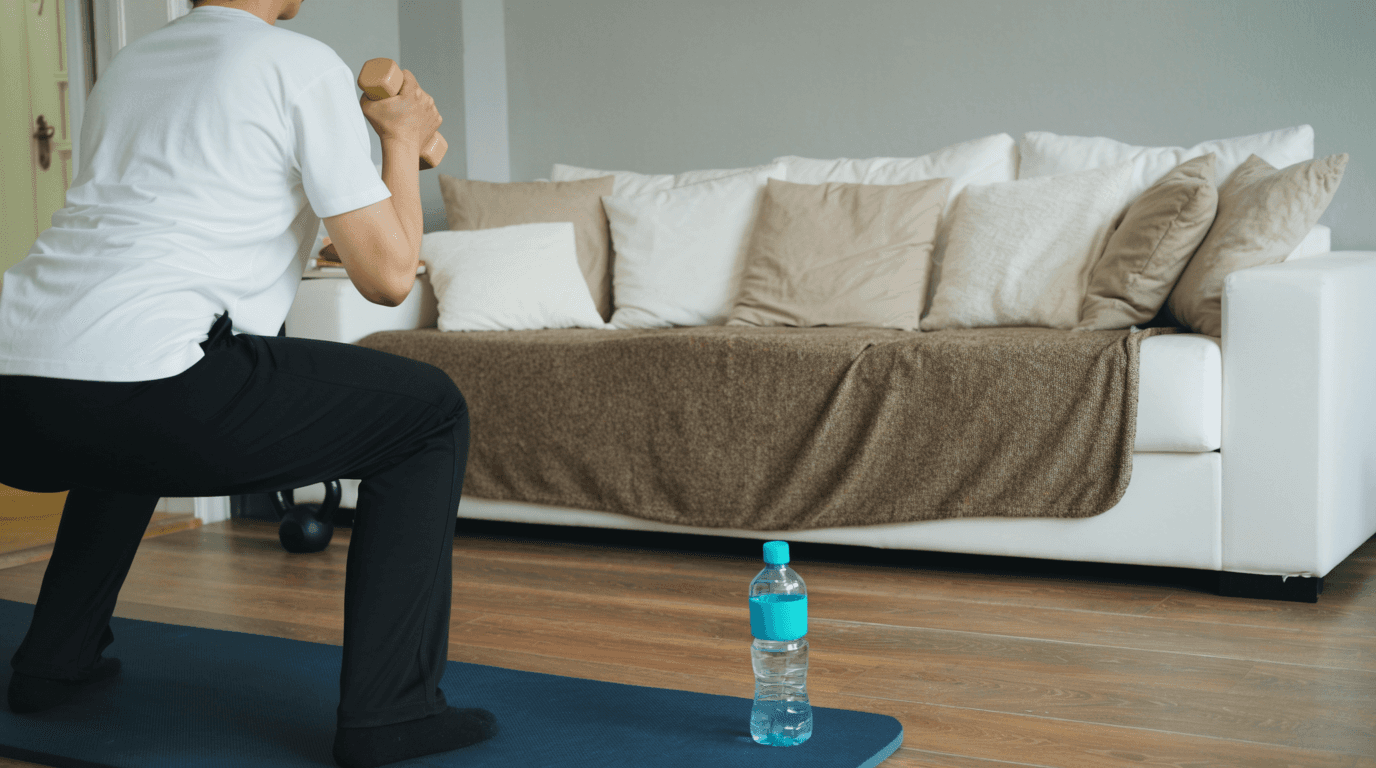
Of everything you could add alongside a GLP-1 medication, structured resistance training has some of the strongest evidence behind it. Research increasingly points to mechanical loading, the actual physical stress of lifting or pushing against resistance, as something that protects your muscles and bones in a way the medication alone simply doesn’t.
What the Research Shows
Studies combining GLP-1 medication with resistance training consistently show better outcomes than medication alone: more lean mass preserved, better maintained grip strength, and improved bone mineral density, even when the overall amount of weight lost is similar. In other words, the medication and the training aren’t doing the same job, they’re solving different parts of the same problem, and both matter. One without the other still works, but leaves a genuine amount of benefit on the table.
You Don’t Need to Become a Bodybuilder
This isn’t about chasing serious muscle gain, though that’s entirely possible for people who want to push in that direction. For most people, the goal is maintenance: keeping the strength and muscle you already have while your body composition changes. Two to three sessions a week covering the major muscle groups is a solid foundation, and it doesn’t need to take up your whole evening, most effective sessions for this purpose can be done in thirty to forty-five minutes.
A Simple Structure to Start With
If you’re new to resistance training, keep it straightforward:
Two to three full-body sessions a week, with at least a day of rest between them.
A handful of compound movements each time, a squat pattern, a hip hinge, a push, a pull, and something that challenges your grip or carrying strength.
Bodyweight or light dumbbells to start, adding load gradually as movements feel comfortable.
Our Strength Training for Beginners guide and Full Body Workout Guide are a good next step if you want a ready-made structure to follow.
What a Session Might Actually Look Like
As a concrete example, a beginner full-body session might include a bodyweight or goblet squat for ten to twelve reps, a hip hinge movement such as a Romanian deadlift or glute bridge for ten to twelve reps, a push-up or seated press for eight to twelve reps, a seated row or resistance band pull for ten to twelve reps, and a plank or farmer’s carry to finish, two to three rounds of each with a short rest in between. None of this requires specialist equipment, a couple of dumbbells or resistance bands at home, or a basic gym setup, is enough to get started.
Why This Isn’t Quite the Same as Ordinary Strength Advice
One nuance worth knowing: because a smaller appetite on a GLP-1 often means less overall energy and slightly slower recovery between sessions, it’s worth resisting the urge to add volume or intensity too quickly, even if you’re feeling motivated after a strong week. Building up gradually, and treating a plateau in your lifts as normal rather than a failure, tends to work better than pushing hard and needing extra recovery days you didn’t plan for. Fuelling around your sessions, covered in more depth in our exercise guidelines article, makes a real difference here too.
Progressing Over Time
Progress doesn’t need to be dramatic week to week, small, consistent increases in weight, reps, or control add up over months. On a GLP-1, it’s worth being flexible about pace: energy levels can fluctuate with appetite and side effects, especially around dose changes, so some weeks will feel stronger than others. That’s normal, not a setback, and it’s worth tracking your sessions loosely so you can see the trend over months rather than judging yourself against any single week.
Form Over Everything Else, Especially Early On
It’s worth prioritising good technique over the amount of weight you’re lifting, particularly in the first few weeks. Filming yourself on your phone from the side for a squat or hinge movement, or asking someone with experience to check your form, can catch small issues before they become ingrained habits. A lighter weight done well builds the same strength foundation as a heavier weight done poorly, without the added injury risk that comes with the latter.
Equipment: What You Actually Need
You don’t need a home gym to get the benefit here. A pair of adjustable dumbbells or a set of resistance bands covers the vast majority of what a beginner or intermediate routine requires, and bodyweight alone, squats, push-ups, lunges, planks, is a completely legitimate starting point with no equipment at all. If you do want to invest in something, a simple pull-up bar and a set of resistance bands together offer a huge amount of training variety for a relatively small outlay, well before a gym membership or larger equipment becomes necessary.
How This Fits Alongside Cardio
Strength training and cardio work aren’t competing for the same slot in your week, they complement each other, and doing both tends to produce better outcomes than either alone. If you’re also walking regularly or doing other cardio, a simple approach is to keep them on separate days where possible, or do strength work first if you’re combining both in one session, since fatigue from cardio can compromise form and effort on the lifting side more than the reverse.
How Long Before You Notice a Difference
Strength improvements from resistance training typically become noticeable within two to four weeks for a beginner, often before any visible change in muscle size, since your nervous system tends to get more efficient at recruiting muscle before the muscle itself visibly changes. This early strength gain is worth knowing about in advance, since it means the effort is paying off well before it’s obvious in the mirror, which can be a useful, motivating marker to hold onto during a period when most of the visible attention tends to go to the number on the scale instead.
What to Do If You Miss a Session
Life happens, and missing a planned session here and there is completely normal rather than a sign the whole approach has failed. If you miss one, simply resume where you left off rather than trying to make up for it by doing extra the next time, which tends to raise injury risk without meaningfully speeding up progress. The routines that work best over months are the ones that flex around a busy week rather than demanding rigid perfection.
A Bonus for Bone Health
Resistance training’s protective effect on bone density is a particularly useful bonus during a period of significant weight loss, when bone health can otherwise take a hit alongside muscle. This matters at any age, but becomes especially relevant for anyone over 40, when bone density naturally begins a slow decline regardless of body weight.
A few patterns tend to trip people up early on: skipping warm-ups because sessions already feel short, which raises injury risk for no real time saving; jumping to heavier weights before movement quality feels solid, which builds bad habits into your technique; and comparing your progress to someone earlier in their own GLP-1 journey or with a very different training history, which is rarely a useful comparison. Slow, technically sound progress with occasional plateaus is the normal path, not a sign you’re doing something wrong.
You don’t need a gym membership or a complicated programme to get the benefit here. What matters is showing up two or three times a week, on a routine you can actually sustain for as long as you’re going through this process, and Sparkery’s structured strength workouts make that easy to build into a week that already has a lot going on.
Tags:
Workout
GLP-1
Share it:
Every read, recipe and workout brings you one step closer to feeling better every day.